core
Shared event / payload / world-state types. The protocol everyone agrees on.
A Sonnet strategist reads the screen and sets goals. A Haiku executor reads YOLO entity detections and emits actions. A synthetic arena races prompt and model variants against a deterministic world. This site is the technical documentation.
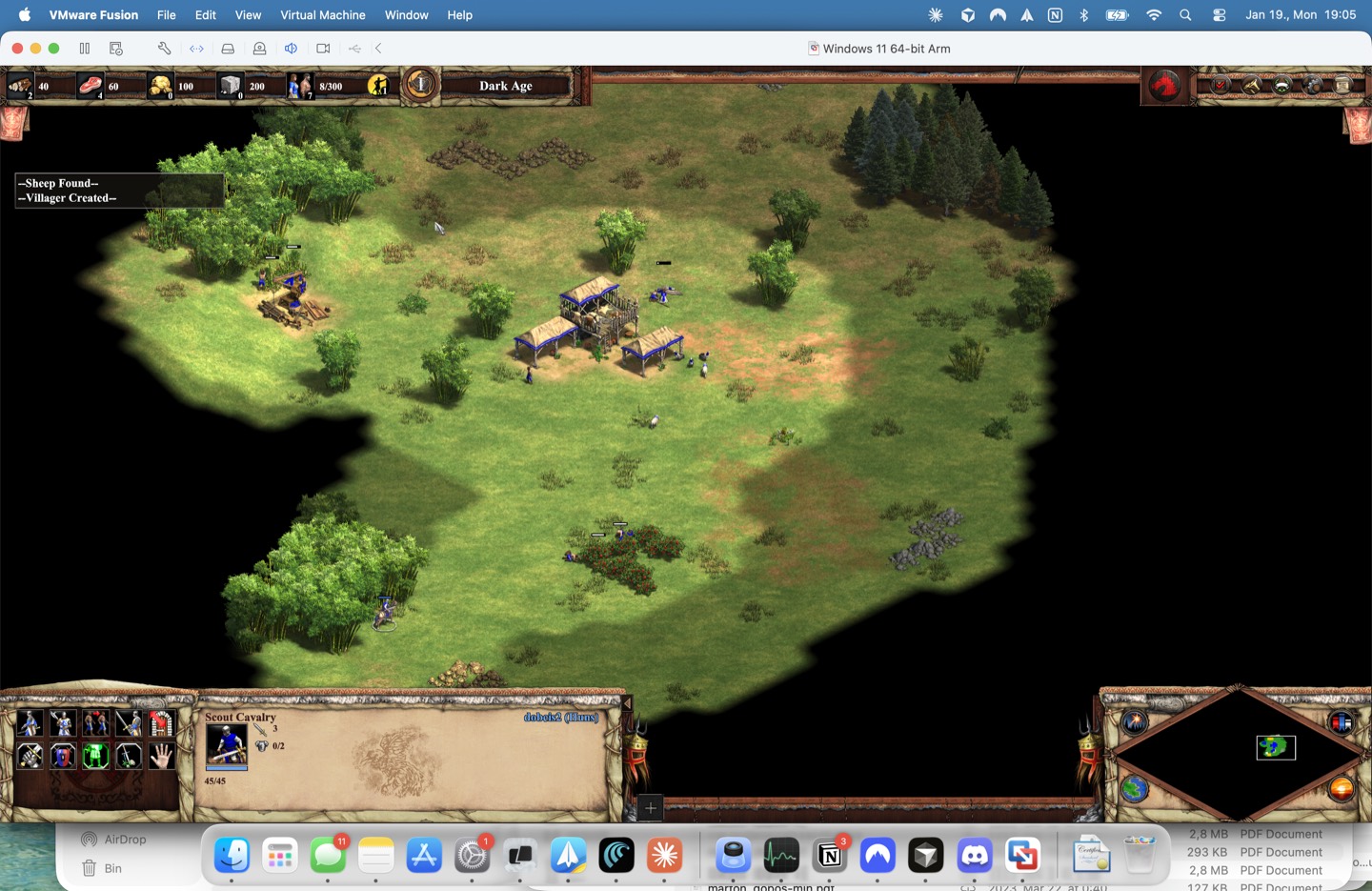
Real screenshot · real detector output (6 entities on this frame) · strategist/executor copy is illustrative.
Eight Parts, ~23 chapters. Starts at the system overview and ends at autoresearch.
Begin
Nine packages in a uv workspace. Pick the one closest to what you want to change.
Package map
Operational guides for when something is broken or needs to be restarted.
Open runbooks
Short curated routes through the 23-chapter tutorial. Pick the one closest to what you want to learn — or scroll down for the full arc.
Three chapters that give you the whole system in one sitting: how the agent thinks, what it sees, and how we know it's getting better.
If you build LLM agents and want to see how a two-tier strategist/executor split, prompt caching, and prompt-evolution loops actually play out in production.
If you train detectors or care about synthetic data: YOLO architecture, our 60-class taxonomy, training pipeline, sprite extraction, and class-schema evolution.
If you build distributed/observability systems: event broker, DuckDB persister, Bradley-Terry ranking, FastAPI + SSE backend, and the fork/diff UI.
The eight Parts in order. Pick a part to jump in.
Nine packages share types through core.
Hover a card to see what it depends on.
Shared
Shared event / payload / world-state types. The protocol everyone agrees on.
SQLite game-knowledge database: tech trees, building stats, unit properties.
Detection
Real game
Real-game loop, goal manager, alarm system, Sonnet strategist + Haiku executor.
core, data, detectionPart IArena
Event broker (in-process / Redis), DuckDB persister, deterministic world_sim projection.
corePart VISynthetic CLI (race/smoke/rank), Bradley-Terry ranking, multi-run orchestration.
core, evaluation, gameplay-agentPart VIFastAPI + SSE backend for live tailing, DuckDB queries, fork replay. Powers the internal UI.
core, evaluation, arenaPart VIIOperations
Automated prompt-optimization loop: mutator, game_runner, memory-chain evolution.
gameplay-agentPart VIIIThe internal arena UI shows what the agent perceives, decides, and does — turn by turn. Click any panel to expand.
Operational guides for the moments when something is broken or needs to be restarted.
The tutorial walks the full system end to end. Each chapter calls out the files it describes, so you can read the code alongside the docs.
Start at Chapter 01